
That Day Already Belongs to Tomorrow
by Fred
I’m not a historian. I’m just someone who maybe spends too much time watching documentaries, wondering how we got here.
And one day I asked myself this: why, in 2026, in an age when everyone has a phone in their pocket and thousands of photos on their hard drive, do we still hire a photographer and/or videographer for a wedding? Where does that need come from? Since when have we been doing this?
I pulled the thread. And as so often with history, what looked like a small question was hiding a much bigger one: the need to leave a trace, to remember, to pass things on. That’s not a 21st-century invention. It’s deeply, viscerally human. I won’t go back to the very beginning of the “why” here. I’ll just start by looking at the question from the early days of photography, then share some personal reflections on my family heritage, and finally look at how I approach weddings with this in mind. The Big Question, I’ll leave to philosophers and historians ;)
Follow me, I’m taking you down my rabbit hole. 🐇
The beginnings of wedding photography and video
So where does all this come from? A little trip back in time.
The daguerreotype and the democratization of portraits
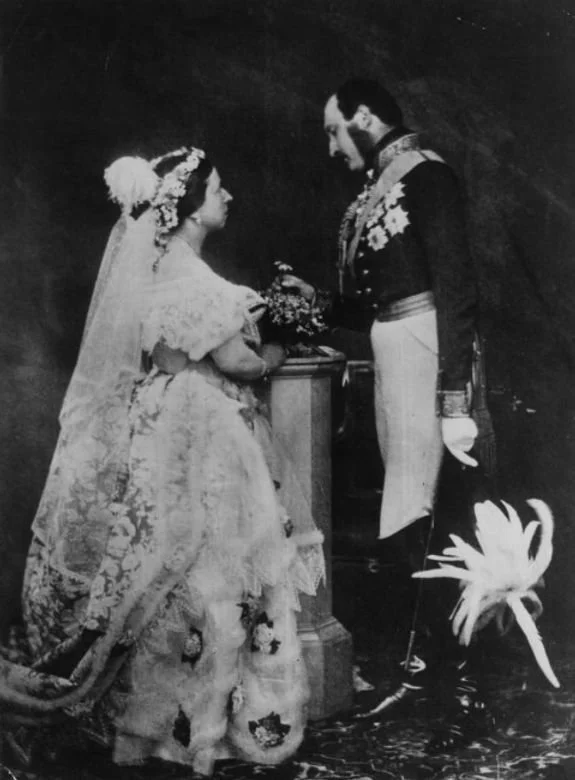
Photograph of Queen Victoria and Prince Albert by Roger Fenton at Buckingham Palace, 1854.
Until the 19th century, only the elite in Europe could have their portrait made, through painting, which was very expensive (150 to 300 francs for a modest size, or about €525 to €1,050 in today’s money).
The daguerreotype changed everything in 1839: for the first time, the middle classes could fix their image durably on a surface for a relatively lower price (around 10 to 20 francs in the 1860s and 1870s for a carte de visite, or about €30 to €100 today). Okay, it took a while to really become widespread, but that’s true of a lot of new technologies.
The first wedding photos weren’t trying to capture emotion. They had a social role: to display rank, respectability, wealth. Stiff pose, eyes on the camera, neutral expression. “The first wedding photograph is considered to be that of Queen Victoria and Prince Albert in wedding attire, in 1854.” They had actually married in 1840, so not exactly great for spontaneity.
Here’s an image from my paternal grandparents’ wedding.
For the little story, while talking about this article with my dad, I learned that they went to the photographer to have their portrait taken, and my grandmother had to stand on a stool because my grandfather was too tall and they didn’t fit together in the frame. 😅
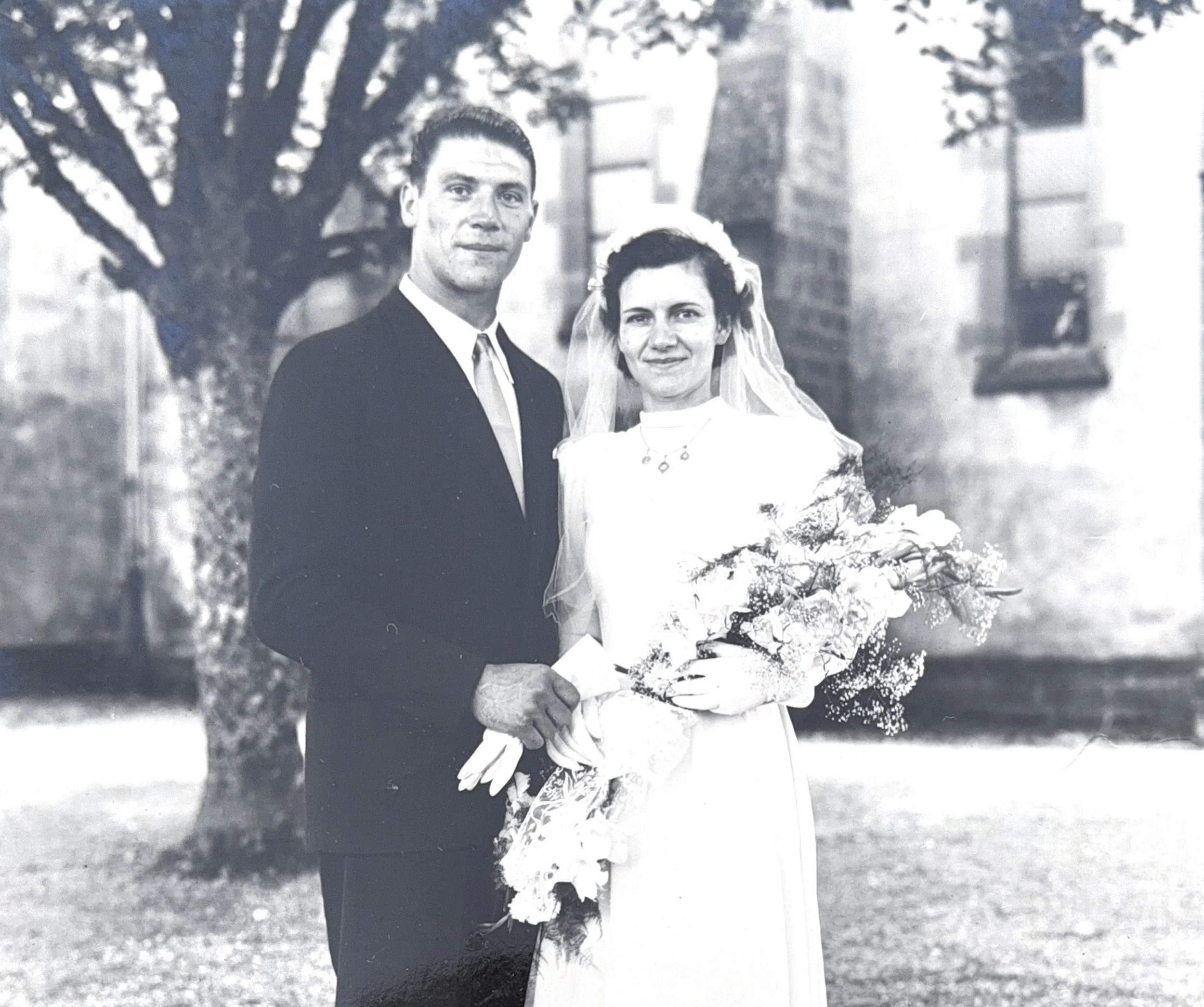
Photo du mariage de mes grands-parents paternel en 1950.
It’s only after 1945 that love enters the frame, that couples start looking at each other, smiling, being happy to be there.
The first wedding broadcast on television
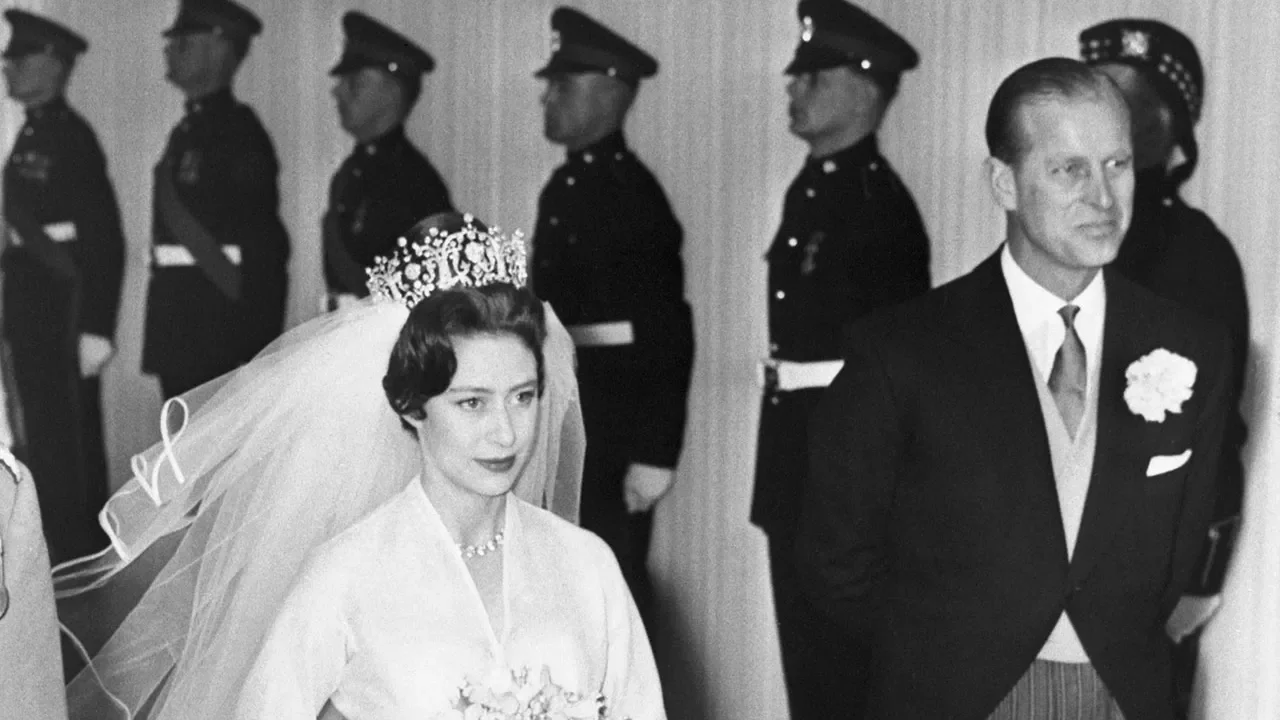
Princess Margaret escorted by Prince Philip to the altar for her wedding to Antony Armstrong-Jones in 1960, the first royal wedding broadcast on television.
On May 6, 1960, Princess Margaret’s wedding at Westminster Abbey was the first royal wedding to be broadcast on television. That was largely thanks to Antony Armstrong-Jones (her husband), a photographer, designer and director. He wanted to make the event accessible and modern. And he wasn’t wrong: 300 million viewers glued to their screens. It was the first time millions of people lived a wedding without being there.
The moving image creates a sense of intimacy with people we knew little about before, a kind of openly admitted voyeurism. And just like that, the saga of royal weddings was launched into the collective imagination as a popular event. Just look at Harry and Meghan’s wedding in 2018: where I was working (a big, well-known tech retailer), everyone stopped working to watch it.
From passing down to heritage
Photo of my maternal grandparents’ wedding in 1952.
So since when did it become essential to have a photographer around on your wedding day?
Photo albums became common from the 1900s, at a time when the wedding photographer was more of a stage director than a reporter. It was mostly after the 1950s that the practice really spread, helped by the arrival of color. Since the 2000s, digital has changed everything: the gear became lighter and more mobile, and photographers shifted toward a photojournalistic approach, closer to people, more in the moment.
In the end, I’ve come to think that everyone wants to immortalize the important moments of their life. Everyone wants to leave a trace, to say “I was alive.” The birth of a child, religious or sports celebrations, family gatherings. Weddings are an integral part of that need. And in 2026, we couldn’t imagine not having a photo or video of that moment, right?
These images aren’t only for you
But why does all this touch us so much? Maybe because these images never truly belong only to us.
What your children will look at one day
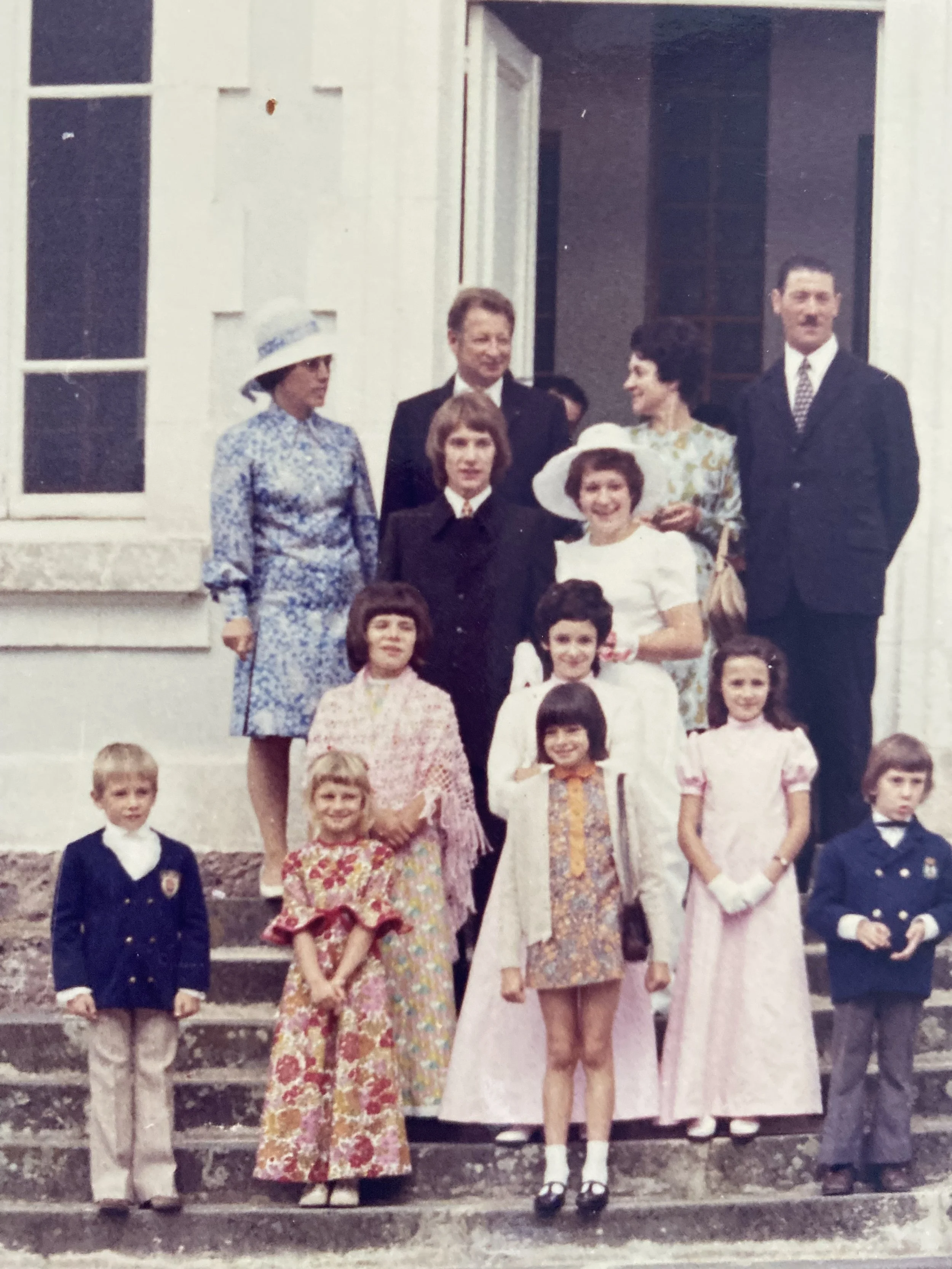
Photo of my parents’ wedding in 1972.
I haven’t seen many photos of my parents’ wedding, because at the time it wasn’t common to hire a wedding photographer, let alone a videographer. They were taken by a couple of uncles who were into photography and enjoyed taking pictures at big family events. But the few that exist, I could look at for hours. My aunt, still a little girl (the little blonde one in the flowery dress). My grandparents, who were just young parents, who were my age! Seeing them like that, with their emotions, their outfits, their looks, means imagining them differently from the way I’ve always known them.
And then there are my parents. A love that didn’t last until today, one I didn’t witness much in my childhood. But in these photos, it’s there. Obvious. And I’m the proof of that moment, the indirect witness of a happiness I never lived but that built me. In my parents’ day, people were happy to get 10 beautiful photos of their wedding (film and reels being what they were). Today, we come out of a wedding with more than 2,000 photos (unsorted, of course).
These photos don’t belong to me. They were taken for them. Yet they’ve become mine too.
We photograph for those who aren’t here yet
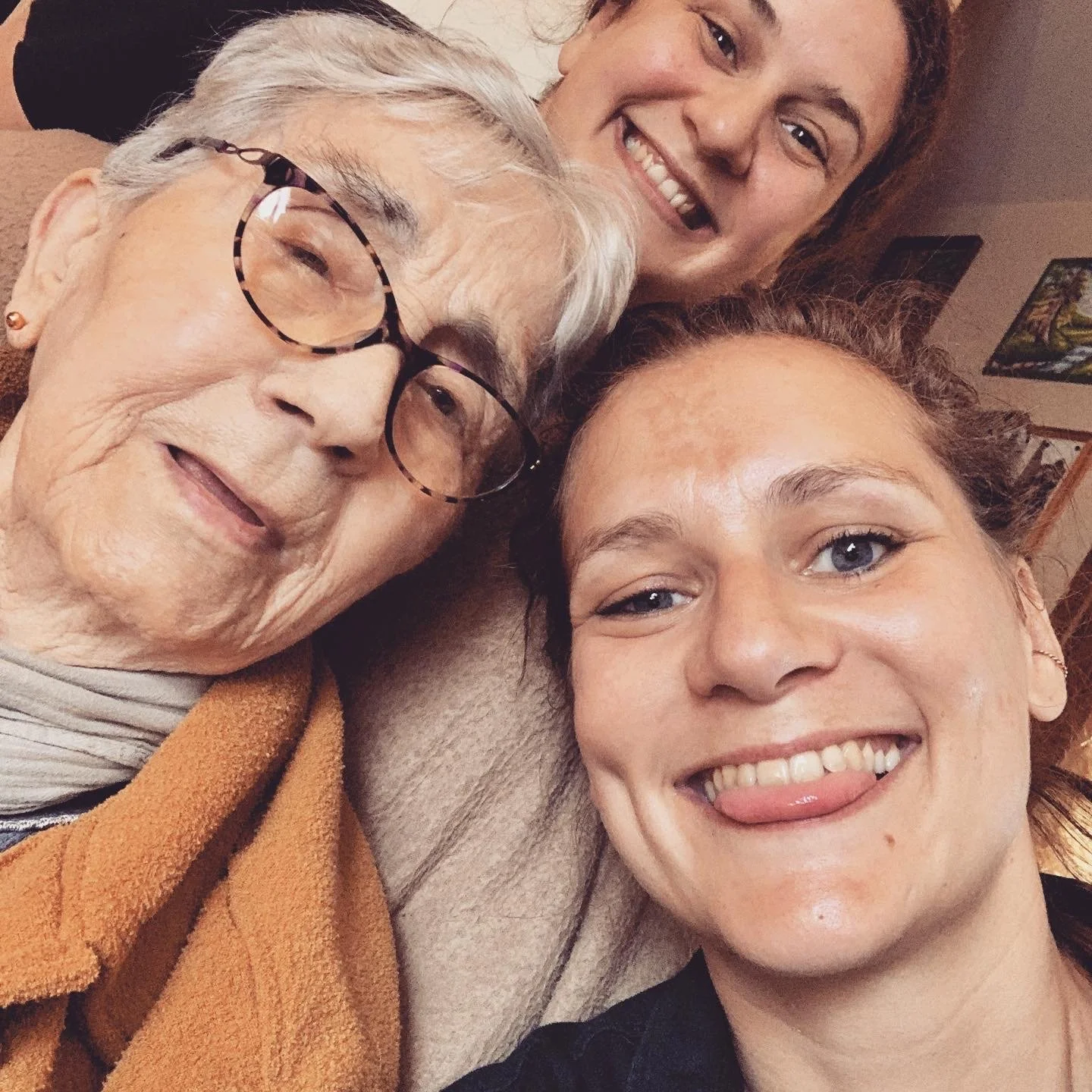
Visit to my grandparents with one of my sisters in 2020. She hated being photographed 😅🩷
One day, your children, or even their children, will come across these images.
They’ll see your dress and want to know why that one. They’ll recognize a place and ask what happened there. They’ll see faces they never knew, or people they know as old, in photos where they were young.
And it will create something. A curiosity. A conversation. That strange, tender feeling you get when you realize your own parents were once your age, that they had doubts, impulses, emotions as strong as ours. That they too were young, in love and a little bit crazy.
These images are a bridge between generations. You don’t feel it on your wedding day. You only feel it decades later.
A historical dimension
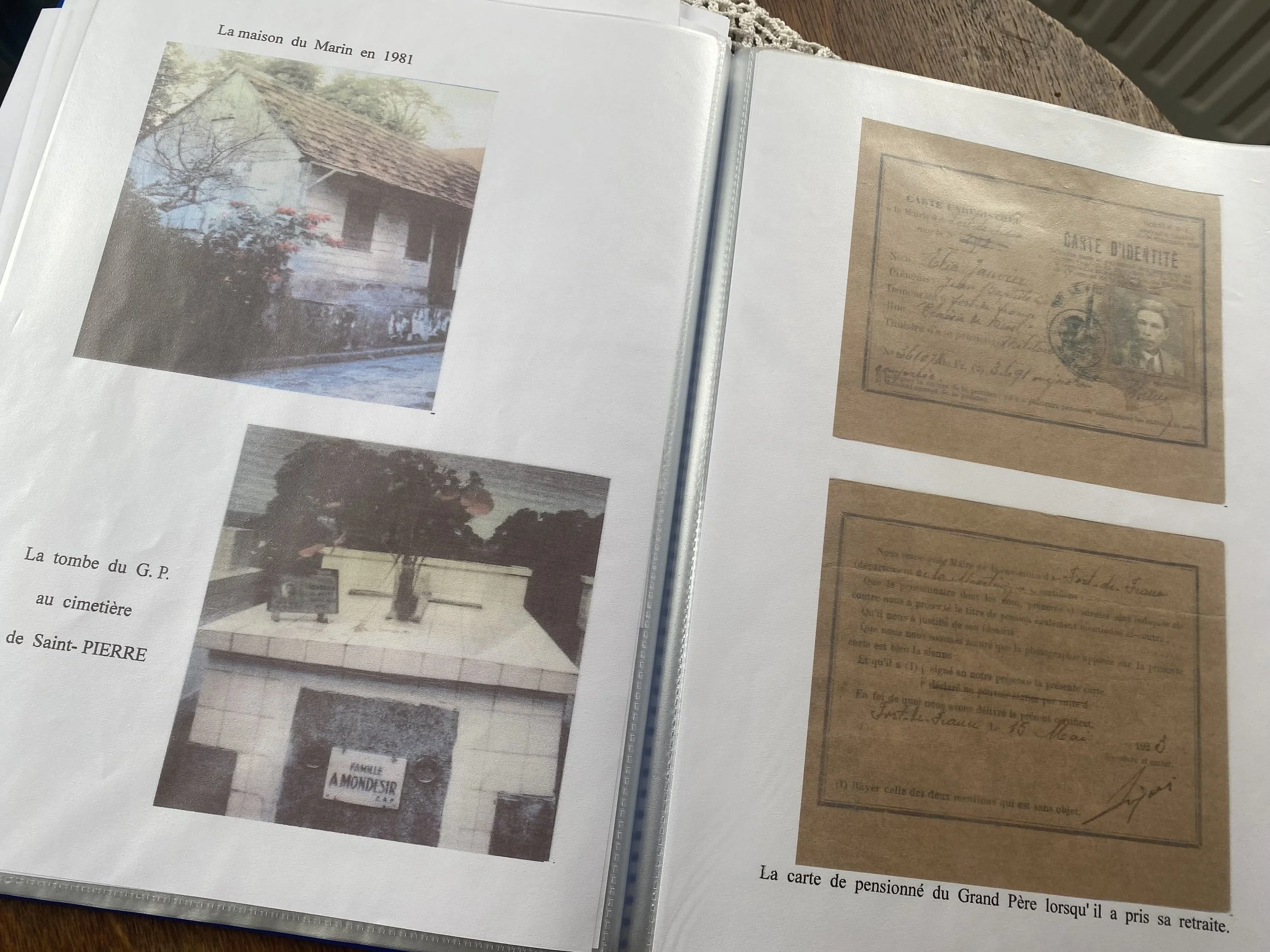
File left to my mother by my grandfather, titled “This is where you come from, never forget it.”
I’ve always been fascinated by the idea of knowing where I come from. Not just in the geographical sense, although that plays a part, but in the human sense. Who were the people I descend from? How did they live? What did they go through? The great wars, the revolutions, the changes in customs and technology that upended their daily lives, did they live through them with fear, with hope, with resignation?
We may feel like we live in our own corner, leading our own small life, but everything is connected. The choices of our great-grandparents shaped those of our grandparents, who shaped those of our parents, who shaped us. And somewhere, your wedding today is part of that same chain.
In the end, your day doesn’t only bear witness to your love. It bears witness to an era, a culture, a way of living and celebrating in 2026. In fifty years, someone will look at these images the way I watch the historical documentaries I love: with that strange and wonderful feeling of seeing real people, in their own time, who didn’t yet know what was coming next.
It’s almost archaeologist’s work, really. Except we don’t need to dig to bear witness.
What it looks like when I film a wedding
So that’s the context. Now, concretely, how do I live all of this when I’m filming?
Why do I do this?
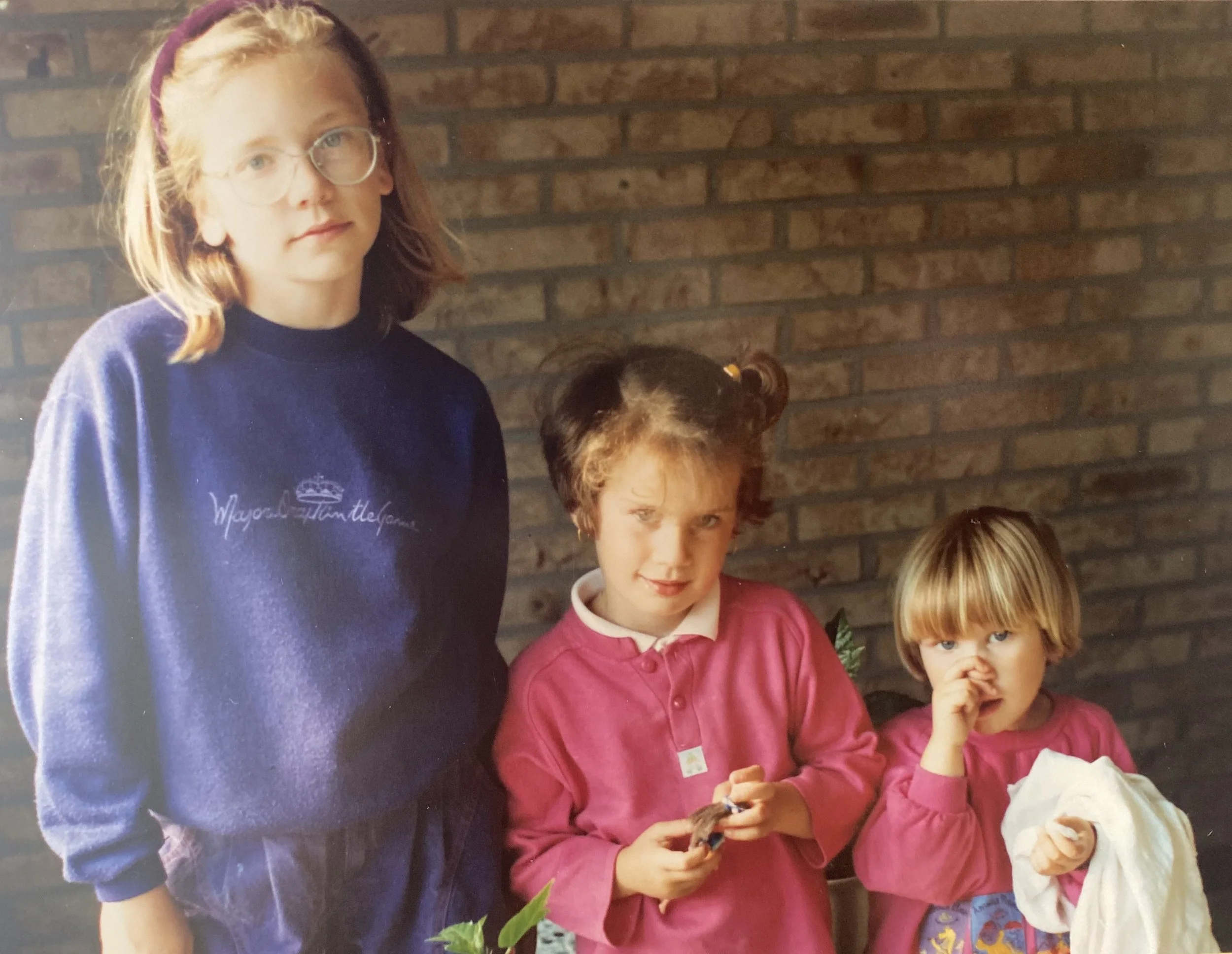
Photo of the three of us in 1990. 💜🩷🤎
Before becoming a wedding videographer, I had several lives, as I told you. The first was my childhood, the youngest of three “expat” sisters (I was 2 when I arrived in Belgium, so I never really lived anything else).
The second I associate with my twenties. I was discovering myself, full of curiosity, not knowing exactly where I was going, so I was lucky enough to do what I loved: graphic design first, and then what I thought would lead me to Pixar’s doorstep: visual effects.
Life had other plans, and at the edge of my thirties I really had to enter working life. So I became a sales assistant at a big retailer, then moved to the stockroom, and finally to managing it, with knowledge of obscure logistics software. Quite the leap, right?
After a few romantic and professional setbacks, Mic invited me one day to come along to a wedding, Marie and Michael’s. We told ourselves, “let’s give it a try; if I don’t get anything usable, too bad, and if I do, great.” With my previous studies, it didn’t seem silly to us, combining my knowledge of cinema with a more human, more concrete setting. And in the end I loved it. People were so kind, the day was intense, and the electric atmosphere of a day that important to two people, it carries you! Editing the film is a moment I enjoy and dread at the same time. I love it when the film takes shape, when the rhythm is there, the right shot, the right “choreography” of the people, the right music. And at the same time there’s everything that comes before: an enormous amount of footage to watch, scrutinize, compile, without yet knowing quite where you want or can go with it.
Not that I’m complaining, mind you, but it’s a new job for me, for my 4th life, and I have to accept starting from scratch, not knowing everything, making mistakes, and I want to approach it with the same honesty I put into everything else.
The tension of filming and grieving what you can’t capture
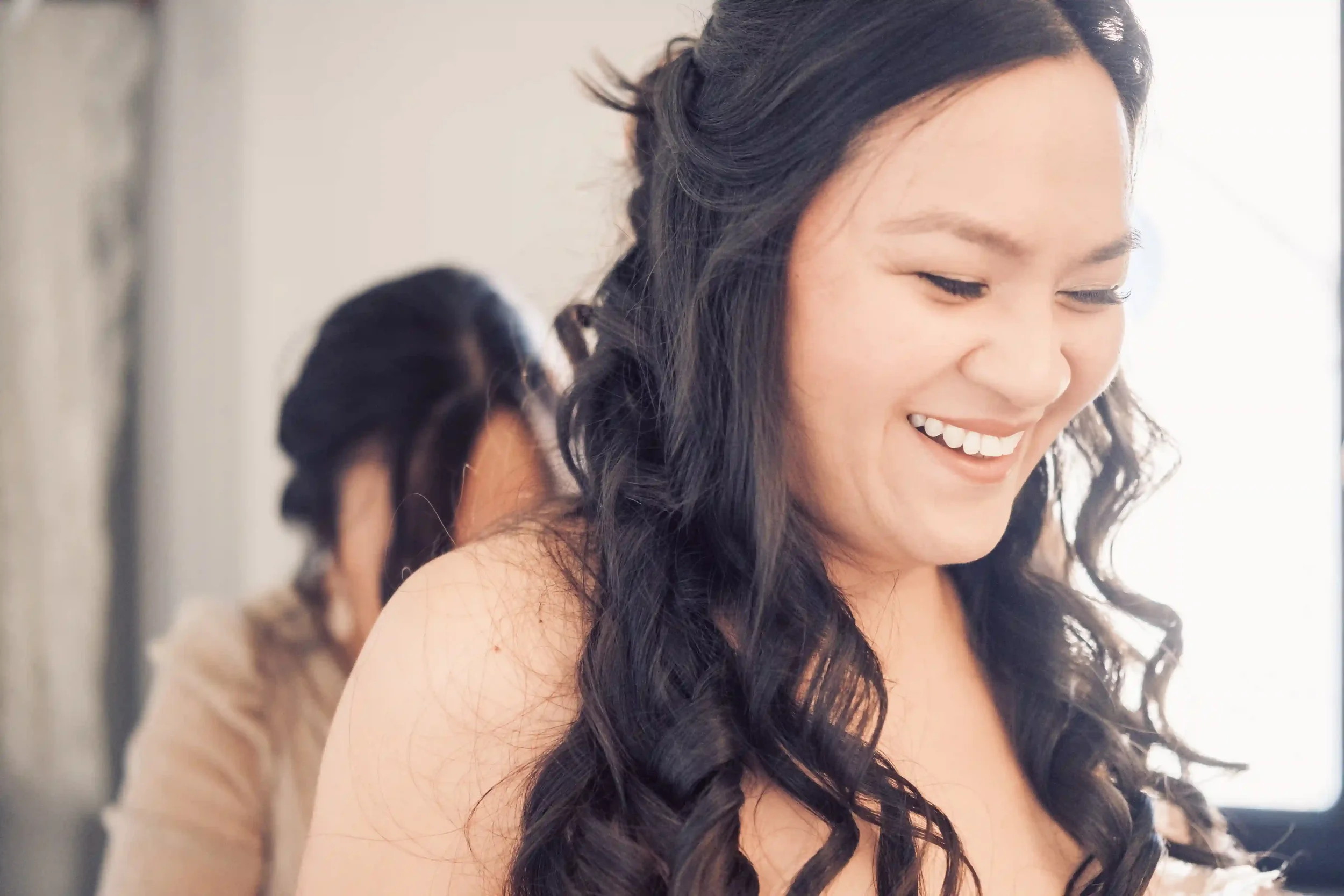
Cindy & Kristof’s wedding in 2024. I couldn’t be there for the groom’s getting-ready.
Being a vendor at a wedding means wanting to miss nothing. Every glance, every tear, every burst of laughter. That’s what we’re there for. And yet, you have to choose. All the time.
At one wedding, the groom asked me afterward whether I’d filmed his entrance into the church with his mother. I hadn’t. I had their arrival at the altar, but at that moment I was already getting ready for the bride’s entrance. One body, two places at once: it’s impossible. That moment was his, and it will now only exist in his memory.
Time constraints add another layer. Couples rarely get ready in the same place. I want images of both, so I have to choose which one I leave and which one I get to in time to film. At a recent wedding, I missed the bride’s getting-ready for that reason. At another, I missed a speech for a reason I still can’t really explain. I reassured myself by thinking that someone in the room had probably pulled out their phone at that moment.
There’s a kind of grieving to do in this job. Accepting that you can’t capture everything. That some things belong only to the people living them. Our role isn’t to be everywhere, it’s to be in the right place at the right time, with enough distance to never impose ourselves where we don’t belong.
A responsibility I carry consciously
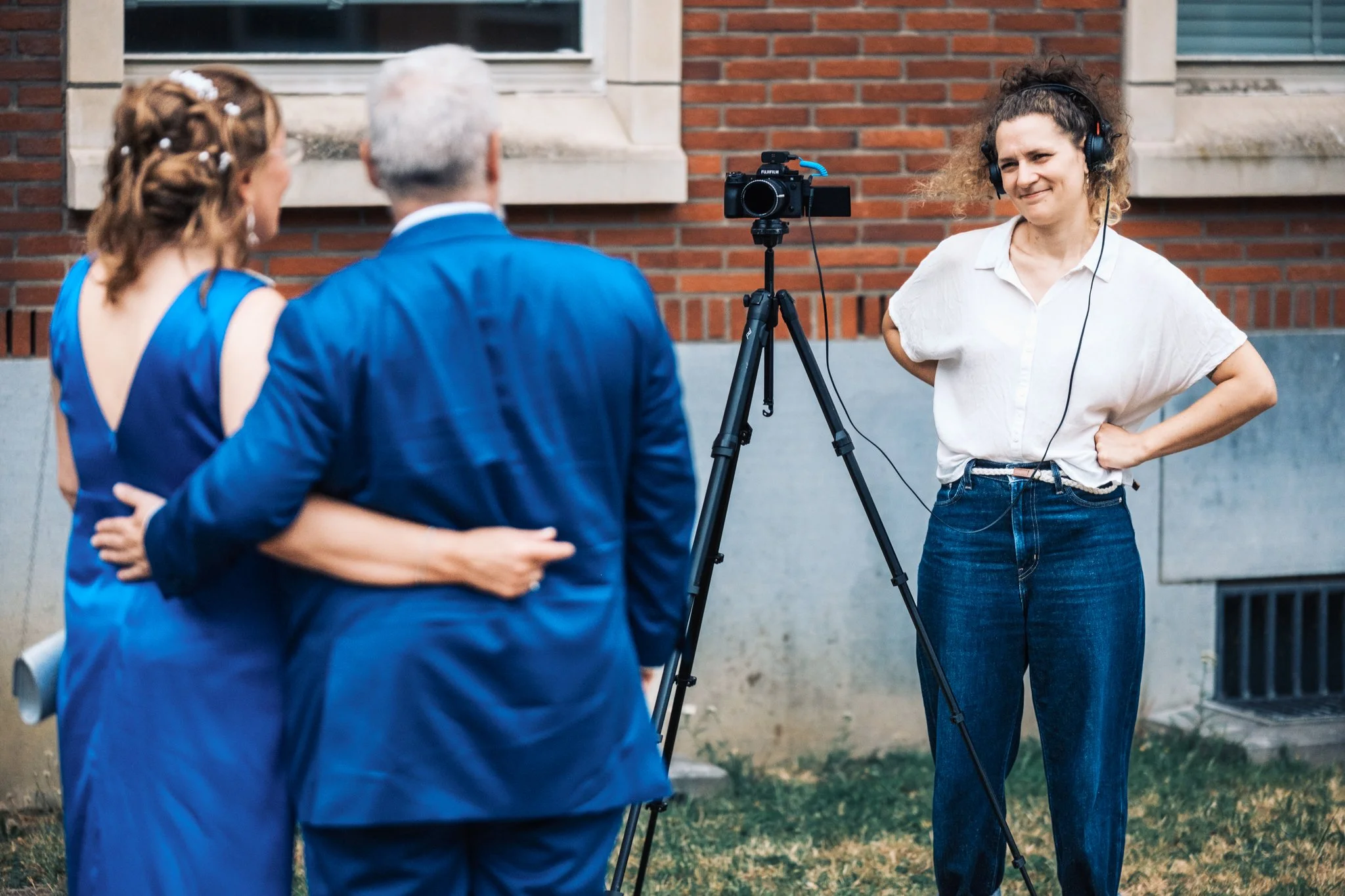
Mariage de Carla & Sébastien en 2025 - Interview des parents du mariés
That’s why I do this job.
Not for the likes. Not for the portfolio, but for these images that end up in albums passed down from generation to generation, on USB sticks or hard drives, like pages in a book of family history. Proof of how we lived, how we loved, how we partied in 2026.
When I film, when I edit, I think about it. About these images that will travel through time. About that couple who, one evening years later, will pull out this film to show their children, their nieces and nephews. Who will show them, without even putting it that way, who they really were. Not the polished versions we show day to day, but the moved, joyful, slightly crazy versions of themselves on that day.
A family tree is a list of names, a tree without faces, without emotions, without context. With these images, it’s a living story. It’s not a contract you sign. It’s a promise I make to you, and to those who aren’t here yet, to do my best.
These images belong to you today. They already belong to tomorrow too, to your story as a couple, but also to History with a capital H.
Feeding our nostalgia, remembering our past lives. In the end, we know very well that photos and videos are first and foremost for ourselves. It’s scary to watch ourselves age, and at the same time it’s cathartic. All these important moments bring us back to the concept of memento mori: enjoy, live, love, because time passes and it won’t come back.
If you feel we share the same idea of what a wedding coverage should be, an honest one, let’s talk!